Showing posts with label Tom Henry. Show all posts

Thursday, December 11, 2014

SHOCKING MURDER LIVE VIDEO

http://wane.com/2014/09/09/video-eby-avenue-shooting-unfolds/
embed code:


<iframe scrolling="no" frameborder="0" allowfullscreen webkitallowfullscreen mozallowfullscreen src="http://up.anv.bz/latest/anvload.html?key=eyJtIjoiTElOIiwicCI6ImRlZmF1bHQiLCJ2IjoiMzQxNzk0IiwicGx1Z2lucyI6eyJkZnAiOnsiYWRUYWdVcmwiOiJodHRwOi8vcHViYWRzLmcuZG91YmxlY2xpY2submV0L2dhbXBhZC9hZHM%2Fc3o9MXgxMDAwJml1PS81Njc4L2xpbi5XQU5FL25ld3MvY3JpbWUvdmlkZW8tZWJ5LWF2ZW51ZS1zaG9vdGluZy11bmZvbGRzL2RldGFpbCZjaXVfc3pzPTMwMHgyNTAmZ2RmcF9yZXE9MSZlbnY9dnAmb3V0cHV0PXhtbF92YXN0MiZhZF9ydWxlPTEifSwiYW5hbHl0aWNzIjp7InBkYiI6IjYyMzk5NTkyIn0sIm9tbml0dXJlIjp7InByb2ZpbGUiOiJMSU4iLCJhY2NvdW50IjoiZHBzZHBzd2FuZSxkcHNnbG9iYWwiLCJ0cmFja2luZ1NlcnZlciI6ImxpbnR2LjEyMi4ybzcubmV0In19fQ"  width ="640" height="360"></iframe>

Video: Eby Avenue shooting unfolds


FORT WAYNE, Ind. (WANE) – NewsChannel 15’s overnight reporter Rod Hissong obtained surveillance video which shows Monday night’s fatal shooting on Eby Avenue unfold. Police have since arrested two men in connection to the murder of 26-year-old John Damarcus Holman.
WARNING: While the footage is not graphic, some may consider it disturbing. 
In the video you can see several vehicles driving on Eby Avenue: a car, van, and a large SUV. Suddenly a large SUV comes to a stop. Someone comes out of the right side of the vehicle and begins shooting at the van.  You can also hear other shots being fired too.
It all happened around 10:15 p.m. Monday. After receiving multiple 911 calls about the gunshots, policed arrived to find Holman in the passenger seat of a van. He had been shot several times and was pronounced dead at the hospital.
Investigators placed numbered placards next to several dozen shell casings in the street. At least 45 casings were marked around the van and several feet away. Police said they were investigating the possibility of multiple shooters due to several different types of casings being located in the street. It’s unclear if Holman fired any weapons.

One home was hit by a bullet after a woman reported a broken window. She was not hurt. A vehicle next to the van that was hit with multiple bullets was also damaged.
Just after 9 a.m. Tuesday police served a high priority warrant on Maumee Avenue.  Officers detained five people there, three were released and not charged. Two men were charged and arrested. Charles Antwon Benson faces a felony murder charge and a felony possession of a firearm charge. Marcus Jovan Lindsey faces a felony charge of assisting a criminal.

Saturday, December 6, 2014

DONT TALK TO THE POLICE.. STAY SILENT..

YOU HAVE THE RIGHT TO REMAIN SILENT.. ETC.. EXERCISE THAT RIGHT HERES WHY:

http://thefreethoughtproject.com/top-ten-reasons-talk-police/

REASON #1: Talking to the police CANNOT help you.

If the police are talking to you, it’s because they suspect you have committed a crime. If they have detained you, it’s because they already have enough evidence to arrest you and they want to see if you will admit it and thus, give them an even stronger case against you.If they have evidence to arrest you for a crime, they will. If they don’t, they won’t. It’s as simple as that.Talking to them or not talking to them won’t make a difference! No one has ever “talked his way out of” an arrest. If the police have enough evidence to arrest, they will. If you deny that you committed the crime, they will not believe you. They already have evidence suggesting that you committed the crime. They’ll assume you’re just doing what every criminal does in denying the offense. It will not prevent you from getting arrested.This is completely contrary to popular belief. For some reason, many people think that they are savvy enough or eloquent enough or well educated enough to be able to talk to the police and convince the police not to arrest them. But ask any police officer if because of the eloquence and convincing story of the suspect, they have ever been convinced not to arrest somebody whom they had originally intended to arrest, and they will tell you no. They will tell you that in their experience, no one has ever talked themselves out of getting arrested. Talking to the police cannot help you. It cannot prevent you from getting arrested. It can only hurt.

REASON #2: Even if you’re guilty, and you want to confess and get it off your chest, you still shouldn’t talk to the police.

People plead guilty in America every day. Probably over 90% of defendants in state court plead guilty at some point during their case. There is plenty of time to confess and admit guilt at a later stage of the proceedings. What’s the rush? Get a lawyer first. Let the lawyer set up a deal whereby you get something in exchange for accepting responsibility for the offense. A better plea bargain, or maybe even immunity. If you confess to the police, you get nothing in return. Zero. In fact, you probably get a harsher prosecution because the state’s case is now airtight, now that you have confessed.

REASON #3: Even if you are innocent, it’s easy to tell some little white lie in the course of a statement.

This kind of thing happens all the time. A person who is completely innocent and who is trying to vehemently assert their innocence will go overboard and take it a little bit too far and deny some insignificant fact, tell some little white lie, because they want to sound as innocent as possible. But if the police have evidence of that lie, it makes your entire statement look like a lie. The prosecutor will ask: “Why did he lie to the police? Why indeed would he lie to the police, unless he were guilty?”
That little white lie could be used to destroy your credibility at trial.
An example would be a man who is questioned about a murder. He wants to sound innocent. He wants to sound non-violent. He is, in fact, innocent. So he denies everything. He denies the killing. He denies being in the area where the killing occurred on the night that it occurred. He denies owning a gun, and denies that he has ever owned a gun in his whole life. But it Turns out that this last statement is not true, And the police can prove it. He did at one time during his life own a gun. Now he has told a lie and the police have caught him and things will only go downhill from there. Although he is innocent of the murder, he has told a lie that will be used to destroy his credibility at trial and could be the cause of his conviction.

REASON #4: Even if you are innocent, and you only tell the truth, and you don’t tell any little white lies, it is possible to give the police some detail of information that can be used to convict you.

For example, a suspect is being questioned about a murder. He is truly innocent of the murder. But in the course of explaining his innocence, he makes the statement that he never liked the victim, because the victim was not a nice guy. A statement like that could be used to prove motive.
Or in the course of the statement, the suspect might admit that he was in the area of town where the murder was committed at the time it was committed. Although he’s innocent and although this statement is true, the prosecutor could use that statement to suggest that the suspect had the opportunity to commit the crime, which looks very bad in front of a jury.

REASON #5: Even if you were innocent, and you only tell the truth, and you don’t tell any little white lies, and you don’t give the police any information that can be used against you to prove motive or opportunity, you still should not talk to the police because the possibility that the police might not recall your statement with 100% accuracy.

What if the police officer remembers something wrong? What if he remembers you said “X” when actually you said “Y”? If the police officer takes the witness stand and contradicts your statements at trial, it will kill your credibility. You can take the witness stand and say “I never said that!” But it’s your word versus a police officer. Who’s the jury going to believe? Who will the jury assume is lying to save his own skin? Who will the jury believe is lying because he’s really guilty? You guessed it. YOU!

REASON #6: Even if you’re innocent, and you only tell the truth, and your entire statement is videotaped so that the police don’t have to rely on their memory, an innocent person can still make some innocent assumption about a fact or state some detail about the case they overheard on the way to the police station, and the police will assume that they only way the suspect could have known that fact or that detail was if he was, in fact, guilty.

Example: Suppose a police officer is questioning A suspect about a homicide. And the suspect makes the statement “I don’t know who killed the victim. I’ve never owned a gun in my life. I don’t even like guns.” On it’s face, there’s nothing incriminating about that statement. But suppose at trial, the prosecutor asks the police officer if anything about that statement surprised him. The police officer answers “Yes, it surprised me when the suspect mentioned a gun, because I had never mentioned a gun before that. I merely told him that I was investigating a homicide.”
When the officer said there has been a homicide, the suspect may have simply assumed that the killing was done with a gun. Or the suspect may have overheard in the police station some other officer talk about the fact that it was a shooting. But if the officer taking the statement had never mentioned a gun or a shooting, and the suspect makes the statement that he had never owned a gun, you give the prosecution the opportunity to create some high drama, suggesting that suspect has had a Freudian slip, and has made a statement about a gun because he is, in fact, the murderer. And as the murderer, he knew that a gun was used.

REASON #7: Even if you’re innocent, and you only tell the truth in your statement, and you give the police no information that can be used against you, and the whole statement is videotaped, a suspect’s answers can still be used against him if the police (through no fault of their own) have any evidence that any of the suspect’s statements are false (even if they are really true).

Suppose the police have a statement from a witness who claims to have seen the suspect in the area where the crime was committed at the time of the incident. Suppose further that this witness is actually wrong, but has made an honest mistake. The suspect then gives a statement to the police in which he says he was nowhere near the area where the crime took place at the time of the incident. By giving the statement, the suspect has now created a conflict between his own statement and the statement of this witness. By itself, the statement of the witness that he or she saw the suspect in the area at the time the crime was committed is not that useful. But by giving this statement, and creating a conflict with this witness’s statement, the suspect has now made this relatively minor witness into the government’s star witness.
The jury will hear the conflict and will assume that the suspect is lying and wonder why.
So even if you tell the complete truth, you’re putting your cards on the table without first seeing what evidence the government has. And if the government has some bit of evidence which, through some honest mistake, contradicts part of your story, you set yourself up to be portrayed as a liar by giving a statement without first knowing what evidence the government has.

REASON #8: The police do not have authority to make deals or grant a suspect leniency in exchange for getting as statement.

People tell me all the time that they gave a statement to the police because the police told them that they would be better off if they confessed, better off if they admitted what they did wrong, better off if they cooperated. The police will make vague statements that things will go easier on the suspect if he simply admits what he did wrong. The police will also make vague statements suggesting that they will do what they can to help the suspect, that they will put in a good word for the suspect, if the suspect will just come clean.
Number One thing to remember: The police do not have authority to make deals, grant immunity, or negotiate plea agreements. The only entity with that authority is the District Attorney in state court and the U.S. Attorney in federal court. Despite their claim that they are trying to help you, the only help police are providing when they take your statement is giving you rope with which to hang yourself.

REASON #9: Even if a suspect is guilty, and wants to confess, there may be mitigating factors which justify a lesser charge.

Mitigating factors are rarely brought out by the police in an interview. Normally, police want to focus on the facts that will suggest the suspect has committed the most severe crime possible. In fact, the suspect may have committed a lesser grade of offense. And if given the opportunity to talk to an attorney first, the attorney may be able to explain to the suspect what facts are important in establishing that he is guilty of a lesser grade of an offense, and not a higher grade. A confession presented in this context to the District Attorney’s office might result in a lesser charge and a more appropriate and fair penalty.

REASON #10: Even for a completely honest and innocent person, it is difficult to tell the same story twice in exactly the same way.

If you tell your story one time at trial and you tell the truth and you’re innocent, there’s very little the prosecutor can do by way of cross examination. But if you’ve told your story twice, once at trial, and once previously in a statement to the police, many months apart, the chances are very high that, even if you are telling the truth, some little details in your statement are going to change.
A good cross examiner will pick up on these changes and will relentlessly question you about them in an effort to make it look like you are lying.
So for all these reasons, whether you are guilty or innocent, whether you want to confess or want to exonerate yourself, whether you’re poorly educated or the most eloquent speaker in the world, you should NEVER, EVER, under any circumstances, give a statement to the police when you have been detained as a suspect.
Note: Credit for some of the Top Ten Reasons goes to Professor Dwayne at Regent University Law School.


Read more at http://thefreethoughtproject.com/top-ten-reasons-talk-police/#0rQebmdfymgXDlbk.99

FTW CITY CODE- NO HOMELESS ALLOWED 130.99

FORT WAYNES DEPRESSION ERA "hOOVERVILLE"- WAS LOCATED WHERE HEADWATERS PARK NOW STANDS- THE "Peninsula"- from Halls gas house, around to the MKL JR Bridge; around to the Harrison street bridge..
http://davidoffutt.files.wordpress.com/2012/01/the-bonus-army-built-a-hooverville-everett.jpg


NO SLEEPING OUTDOORS, UNDER BRIDGES, IN PUBLIC; ETC
READ IT AND then ask your city council to re-write this local law; and  see if the FWPD- can   do anything about not being so heavy handed towards the homeless.
BUT- when out on "homeless enforcement Patrols- to be sure the FWPD- checks peoples IDs for fugutives, unregistered sex offenders; violent felons, and so on; and to direct  the holeless out in the cold- to places where they can get indorrs and get some help; as the homless are typically people with mental health issues, mental  disabilities -  low IQ; etc;  or so on..

CITY CODE LAWS NEED TO BE ENFORCED, OR CHANGED- as a so-called "nation-of laws"- this situation cannot stand- the police need to do their jobs. at the least- check for warrants, other law compliances..
OFFENSES AGAINST PUBLIC PEACE AND SAFETY
Bookmark§ 130.01 SLEEPING IN SHEDS, BUILDINGS OR OTHER PUBLIC PLACES.
It shall be unlawful for any person to be found lying or sleeping in, along or upon any public street, park or other public place, or in any shed, stable, outhouse, building, warehouse, railroad depot or railroad car, in or about any yard, mill or factory in the city, without having the permission of the owner or occupant thereof to so sleep or be in such place. ('74 Code, § 18-41) Penalty, see § 130.99

MAYORS RACE- ISSUES OF CONCERN

WHAT DO YOU ALL THINK WE SHOULD DO- AND WHAT ARE WE WILlING TO PAY FOR?
WHAT SHOULD THE BALANCE BE- BETWEEN THE FREE MARKET PAYING FOR FREE ENTERPRISE? OR WHAT SHOULD WE PAY FOR COLLECTIVELY? COMMUNALLY?( SOCIALISM?)- AND WHAT OF PUBLIC PRIVATE "PARTNERSHIPS?( STEAL FROM THE POOOR TO GIVE TO THE RICH?

http://www.fwbusiness.com/business/latest/businessweekly/article_c1f412a2-9ec1-534f-9535-485d9bfb1016.html

Fort Wayne election issues beginning to take shape

Posted: Friday, September 26, 2014 12:00 am

As the situation stands in Fort Wayne now, local voters could see Democrat incumbent Tom Henry take on Republican City Councilman Mitch Harper in next year’s race for mayor.
That being said, a lot could happen between now and the next election. Talk of next year’s races is preliminary while some political leaders, observers and voters still have their attention trained on the upcoming November ballot.


Thursday, December 4, 2014

FORT WAYNE POLICE BOMB SQUAD BOMB DOG K-9

news-sentinel link: http://news-sentinel.com/apps/pbcs.dll/article?AID=/20141204/NEWS/141209881/1012/LOCAL
subscribe- news-sentinel you-tube channel
https://www.youtube.com/channel/UCOA1YqKwaQ8JYpBtO0RasSw

 MILITARY /POLICE SURPLUS PROGRAM MRAP-  EOD/BOMBSQUAD/COMBAT ENGINEERS

http://www.nationaldefensemagazine.org/archive/2013/February/Pages/TheMRAPReuse,Recycle,Reduce.aspx

FWPD to have new bomb dog

Thursday, December 4, 2014 - 7:44 am


There will soon be a new bomb dog on the Fort Wayne Police Department.
For the past several years FWPD had been relying on the county for help from its bomb dogs, but the city department is now training one of its own K-9s in explosives detection. Coris, an 18-month-old Belgian Malinois has been training with her partner, FWPD officer Dustin Engelman, since the beginning of July.


Video link:
<iframe width="560" height="315" src="//www.youtube.com/embed/bwoC-IhuwRs" frameborder="0" allowfullscreen></iframe>
x
Monday morning Engelman ran Coris through a training exercise in which she had to find three different explosives. She found the hidden item every time: once in a stage trap door, once in a desk drawer and another next to a barrel in the Fort Wayne Regional Public Safety Academy garage.
She works on a 15- to 16-foot line and is trained to sit or lie down when she scents an explosive. By the time her training is done she will be able to recognize the odor of 16-18 different explosives.
"The difference between being a narcotics handler and a bomb handler is night and day," Engelman said.
With explosives the handler works further back with a long lead and lets the dog do the search. Once they find something it needs to be a passive response so the dog doesn't accidentally bump something.
Sgt. Bob Theurer, K9 unit supervisor/handler and a North American Police Work Dog Association master trainer, said the difference between a German shepherd and a Belgian Malinois is like a comparing a Chevy to a Ferrari. Coris is extremely smart and high energy.
"If you blink you are going to miss something she does," Theurer said.
For Engelman it has been a learning experience. The first week of class he sprained two fingers.
"This is a young man's dog," Engelman, 45, joked.
She is very high energy and extremely social. Generally Malinois are not extremely social, but highly work-oriented, Theurer said. Coris is curious about everything and extremely smart.
"Show her something once and she remembers it," Theurer said.
Coris has two modes,: she is either on her handler's lap and licking his face, or intensely working. Her reward for doing the right thing is a pull toy. She has already been certified as a utility dog and is very close to going through her certification test as an explosives dog.
"In narcotics the handler leads the dog; in explosives the dog leads the handler," Theurer said.
For Engelman this is the first dog he has trained all the way through to certification. His first K-9 partner, Nemo, was retired from the force last year. Nemo was not trained as an explosives dog. Engelman had been on the FWPD force for 20 years before switching to K-9. When he made the switch he had to be brought up to speed on how to handle Nemo, who had a former partner. Now he and Coris are working together, both learning new things and building a relationship from the beginning.
So why a K-9 bomb dog handler?
"I was in the military for 20 years and have always been extremely interested," Engelman said.
Theurer said it's a job with a lot of responsibility. When an officer and a narcotics dog have an off day and miss something it means somebody got away with their drugs, when a bomb dog and officer miss something it means lives are at stake. Theurer said he had an explosives dog for a while but found he spent a lot of time worrying about the what-ifs. He couldn't relax until the event he had swept a building for was over. It takes a special handler to deal with the pressure. He believes Engelman, with his military background, service in Desert Storm and Afghanistan, has a good understanding of the commitment.
Currently, Engelman and his canine partner are working on the streets in her utility dog capacity. Once she gets her explosive certification she will be doing that, too. If all goes as planned, Coris will be a certified explosives dog by 2015.
xCAR BOMB EOD DETONATION/DISPOSAL
http://www.liveleak.com/view?i=06a_1225864333

x
BOOM! 
<iframe width="640" height="360" src="http://www.liveleak.com/ll_embed?f=06a_1225864333" frameborder="0" allowfullscreen></iframe>

x
MILITARY BOMB SQUAD/EOD -IED  TOOLS:
http://js.defencetalk.com/wp-content/uploads/2011/06/iraqi-army-MRAP-route-clearance.jpg

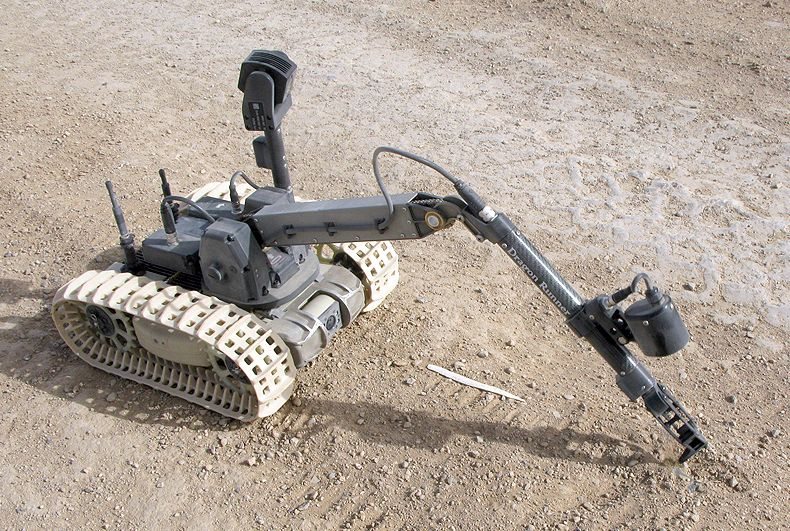
BOMB SQUAD/ EOD ROBOTS
http://media.defenceindustrydaily.com/images/LAND_Robot_MMP-15_MMP-30_TMS_lg.jpg

http://www.defencetalk.com/wp-content/uploads/2010/01/bomb-disposal-robot-anti-IED.JPG
https://blogger.googleusercontent.com/img/proxy/AVvXsEhmjfWmSk7ZlJGqFCsSRNVc-yp0fDBXsnBJCAY8MRtmKFGF-FPmC6T4-2jcnGZGurFzExKX-0SZJkZeZLhfUWhlM8HRXvFdoobn-dJPLcTzoHqOvGFv0W-bLW1b0WA3IHW9RGWE_kJG3GTtsCAqoFi5QQ27YEsXaKfVXOGJbwObM3r52QINDBHnW-YaxOfSEs1JSQDeYyc=

AND SOMETIMES- YOU JUST HAVE TO GET UP CLOSE AND PERSONAL- 
OLD SCHOOL- BAYONET, , AND JUST DIG.. ..... AND PRAY.....
"dear God.. please dont let this mother fucker blow up in my face. I  dont want to die today. thank you.. HAIL MARY, ETC....  repeat as necessary..
http://i.telegraph.co.uk/multimedia/archive/01824/bombSUM_1824746a.jpg


HURT LOCKER:
http://www.operations.mod.uk/fingal/fimages/bomb_disposal.jpg

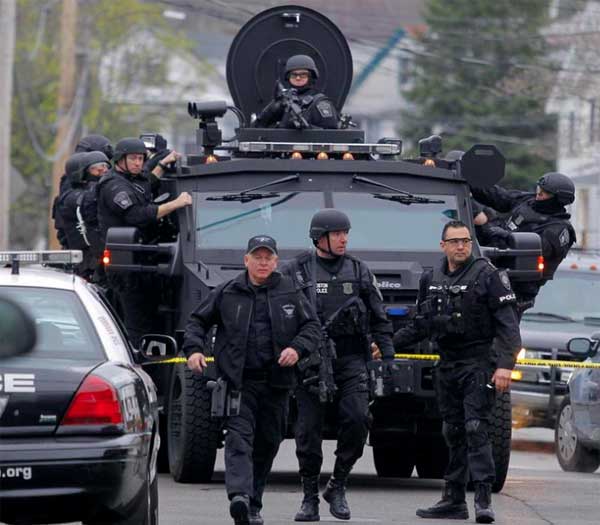
A  typical URBAN POLICE  BOMB SQUAD CORDONING OFF THE BLOCK
( defusing the situation with the neighbors?) (PUN>>) 

why BLACK PAINTED VEHICLES?  BLACK SPRAY PAINT IS DIRT CHEAP- ABOUT 2- 3 BUCKS A CAN..  AND- to distinguish CIVILIAN POLICE and   MILITARY NATL. GUARD UNITS, ETC.. 
http://www.lewrockwell.com/assets/2014/01/mrap.jpg
standing around, waiting for shift change... lol..

LOCAL FORT WAYNE MILITARY /AEROSPACE / CONTRACTOR
POLICE SURPLUS  MILITARY SUPPLY PROGRAM: 
why not use it? we already paid for them MRAP's; etc- and if we scrap them- its waste; and if we leave them in Iraq; afghanistan, etc-  the ENEMY WILL COMANDEER THEM; or sell them dirt cheap to our other enemies.. defeats the purpose.. so ...
https://blogger.googleusercontent.com/img/b/R29vZ2xl/AVvXsEjm1oHiG2u8UDtVmRH6t0incnVTZSdwAUoSWSIwepdhKz0FE7tniYwrWsoR6t4Y46feDXjtAP6q63LI4CpLMOvJoNCBBhS5pskbXBQNOvEc9AQFgr6RfrtNAO-tu01Rsy5mF7Ny05d2CCgA/s1600/American-MRAP-vehicles-in-012.jpg


The MRAP: Reuse, Recycle, Reduce 
February 2013 
By Stew Magnuson 
 

The Army in November awarded BAE Systems a $37.6 million contract to provide the spare parts and kits needed to convert 250 Mine Resistant Ambush-Protected vehicles into trucks for bomb disposal teams.

It is another sign of life for the massive tactical wheeled vehicles that were rushed into the field to respond to the roadside bomb threat in Iraq during the previous decade.

The 250 RG33 trucks that will be converted at the Letterkinny Army Depot in Pennsylvania into vehicles that are designed for explosive ordnance disposal teams shows that they may not all be white elephants.

“We are just scratching the surface of what our MRAPs can do,” said Bob Walsh, vice president and general manager of Navistar Defense, one of the contractors that answered the call to rapidly field the armored trucks during the last decade.

“Before going out to buy a new vehicle, look at the MRAPs. It will be a lot more affordable to change the configuration of these vehicles versus buying a brand new vehicle,” he said.

The $45 billion effort to rapidly field a new blast-resistant truck produced some 20,000 vehicles. Production ended last year, but upgrades are still being done as fighting continues in Afghanistan. The vehicles in the Army have transitioned to a “program of record.” Some are headed for scrap yards. A few will be left in brigades as troop transports, and for training. As much as 60 percent of them will be put in mothballs. Some surplus MRAPs could find life in foreign militaries, or even be given to local law enforcement special weapons and tactics teams.

Oshkosh Corp., maker of the MRAP-All Terrain Vehicle, the variant quickly produced to fill off-road mission requirements in the rough terrain of Afghanistan, inked a deal to sell 750 of them to the United Arab Emirates. Navistar also continues to market its MaxxPro to overseas customers.

Walsh said all the money in the MRAPs was put into survivability to defeat roadside bombs. The highly protected capsules can be swapped out easily. He foresees the trucks being converted to a myriad of uses. They could host computer servers and become command posts, for example. Navistar is in the process of upgrading some of its old MRAPS with rigid axels to ones with independent suspensions to handle more off-road missions.

Michael Clow, spokesman for the Army’s Program Executive Office for Combat Support and Combat Service Support, which now oversees MRAPs, said the new contract work is on top of an order to convert 750 RG31 MRAPs into medium mine protected vehicles to support engineer units in route and area clearance operations.

BAE will provide a rear ramp — used for the deployment of remotely operated unmanned ground vehicles — in route and area clearance missions, and a new heating and air conditioning system for the vehicle.

Clow said the Army may not be done repurposing MRAPs.

“The Army continues to evaluate future force structure requirements and the best mix of assets to satisfy those needs — this could potentially include currently fielded MRAPs, additional MRAP improvements, and potential other uses for these vehicles.”

They could also be available for “contingency responses,” he said.

Photo Credit: BAE Systems